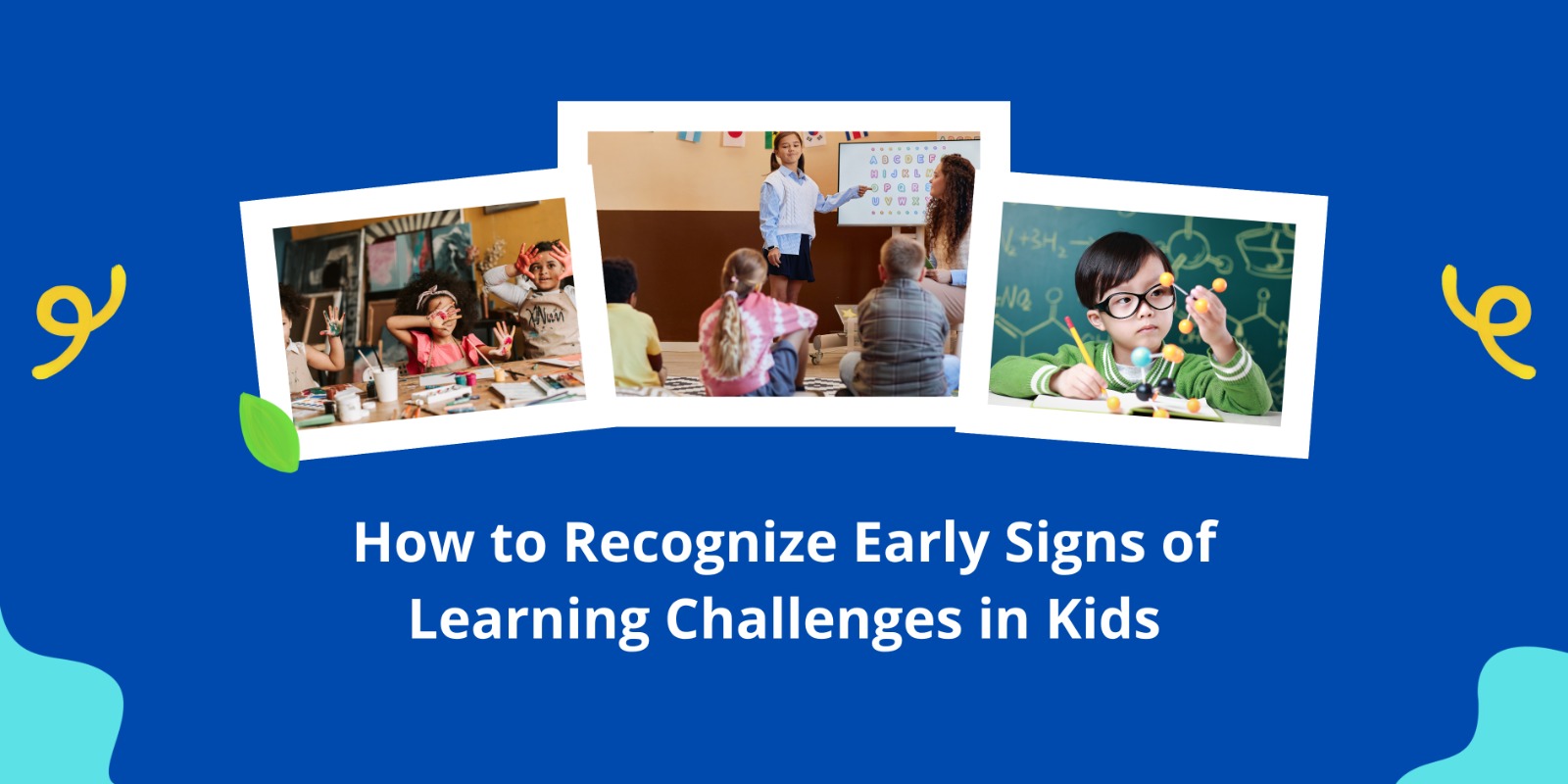
How to Recognize Early Signs of Learning Challenges in Kids
When it comes to recognizing early indicators of learning challenges in kids is a question many parents and teachers find themselves asking. Recognizing learning challenges early is important because it allows the child the opportunity to have the proper support, before academic pressure, frustration or self-doubt becomes a factor. Learning challenges could present itself through language, reading, numbers, attention, communication or motor skills. When they are recognized early, the child more than likely will receive timely intervention, flexible learning options and increased confidence.
At BTG Education & Training Institute, we know that each child has a learning style that needs to be understood and supported. This blog outlines how to recognize early signs, the importance of early recognition, and the impact families and schools can make.
The Importance of Early Recognition of Learning Challenges
The early signs of learning challenges may not seem significant, but they impact a child's long-term academic development as well as their emotional development. If they are not recognized, the child will possibly begin to struggle in school with feelings of wanting to avoid the task, or to become discouraged for their education. If we are able to recognize the learning challenges early, we can provide a solid foundation for success.
By recognizing a learning challenge a child faces early, we can:
● Narrow the academic gap
● Help to limit the amount of frustration and behavior issues a child will struggle with
● Build confidence in the child's ability to master learning
● Support emotional growth and development
● Improve overall learning for years to come
● Provide children with $10 word knowledge.
Recognizing Learning Difficulties
Learning difficulties are not always obvious. They can look different for different children and present with respect to reading, writing, mathematics, attention, processing or communication, etc. Some children may display clear signs of difficulty while others may keep it a secret in order to avoid embarrassment.
Learning difficulties are not an indication of intelligence. Many children with learning difficulties are bright, creative and capable... They require precise instruction based upon how they process information in their brains.
Early Signs Seen at Home: What Parents Might See
Parents are usually the first to recognize signs of early learning difficulties because they see their child within natural contexts. Learning difficulties do not indicate a particular diagnosis but the and the possible need for support.
1. Delayed Speech or Language:- If a child struggles to form sentences, follow spoken directions or express their thinking it will affect their future reading and writing ability. Delayed speech often looks like limited vocabulary or inability to clarity in their communication.
2. Difficulty Understanding Simple Tasks:- Children that have difficulty following basic directions or remembering first and second steps may be experiencing early processing or attention challenges.
3. Avoidance of Learning Activities:- Kids that avoid reading, drawing, writing or playing with numbers could be communicating their frustration instead of their feelings about the activity/lack of interest.
4. Extreme Emotions to Homework Completion:- Frequent crying, irritability or giving up can indicate concern, frustration or difficulties in the learning process.
Indicators of Learning Challenges in the Classroom
Teachers are in a unique position to identify concerning early learning challenges because they can observe children in structured learning environments and have the ability to observe children's learning and development relative to their peers.
1. Slower than Expected Academic Progress:- A child may show slower than expected progress in recognizing letters, sounds, numbers or simple words than their peers.
2. Difficulty Directing Their Own Attention:- A child may struggle to direct their attention, stay still, or may appear distracted. This level of behavior may indicate attention deficit hyperactivity disorder (ADHD) or other executive-functioning challenges.
3. Difficulty with Transitions:- A child who appears to become overwhelmed or upset when moving from one activity to another may have difficulty with cognitive flexibility or processing.
4. Problems with Reading or Writing:- Dyslexia and other written expression problems begin to show as early as preschool and are often seen as student struggles to recognize letters, reverse letters, or confuse words that look similar.
5. Changes in Social or Behaviors:- Children who feel a sense of frustration may become withdrawn socially, show aggression, or show a propensity to solitary play over group play.
In the situations above, academic problems often provide the clearest signals that a child is most likely having trouble, and would benefit from additional support and interventions.
Signs Related to Reading.
Reading problems can show up early, and signs can include:
● Trouble recognizing letters or sounds
● Difficulty blending sounds together
● Slow reading development
● Avoiding books, or reading aloud
All signs above may continue to serve as early flags for dyslexia or language-related learning problems.
Indicators Related to Writing
A child may have difficulties with:
● Gripping a pencil
● Writing on lines
● Spelling simple words
● Putting their ideas on paper.
These indications may represent difficulties with early written expression or motor coordination.
Indicators Related to Math
Early math difficulties may represent:
● Confusion with the meaning of numbers
● Difficulty understanding counting
● Hassle with simple addition or subtraction
● Not recognizing patterns.
These difficulties may represent dyscalculia or other math processing difficulties.
Indicators Related to Processing and Attention.
Not all learning difficulties relate to academic performance. Some children can present difficulty with attention, or organizing their tasks, and/or processing information.
1. Processing Speed:- A child may just need more time to explain the instructions given or to finish an assignment.
2. Remembering Information:- Short term memory is challenged by the ability of remembering instructions, staying on task, or having to relearn the same concept.
3. Disorganization:- Managing your notebooks, losing your materials, or having to organize an assignment shows signs of executive-function difficulty.
4. Attention Span:- A child can become restless fast, may not be able to sit through a lesson, or may appear “lost”during instruction.
BTG’s approach to identifying early learning challenges
BTG Institute of Education & Training has its concepts on early identification and intervention for children exhibiting signs of learning challenges. Its approach includes:
-
Degenerative screening.
-
Individual learning assessments.
-
Tailored learning plans.
-
Multi-sensory teaching strategies.
-
Support of parents and teachers.
-
Specialist educational workshops.
Our job is simply to help children learn with confidence, which can only stem from the valued support base.
Conclusion
Early detection of children's learning challenges is significant because the fixed base for success is established. Once a teacher and a parent can recognize these signs, children will have help before the struggle gets too much. Early recognition equals better performance at school, emotional health, and increased self-esteem. All children are capable of learning in their own way, at their own pace, said BTG. If you catch it early, parent support, proper methodology, and a stable environment would allow children with learning challenges to excel academically, socially, and emotionally.